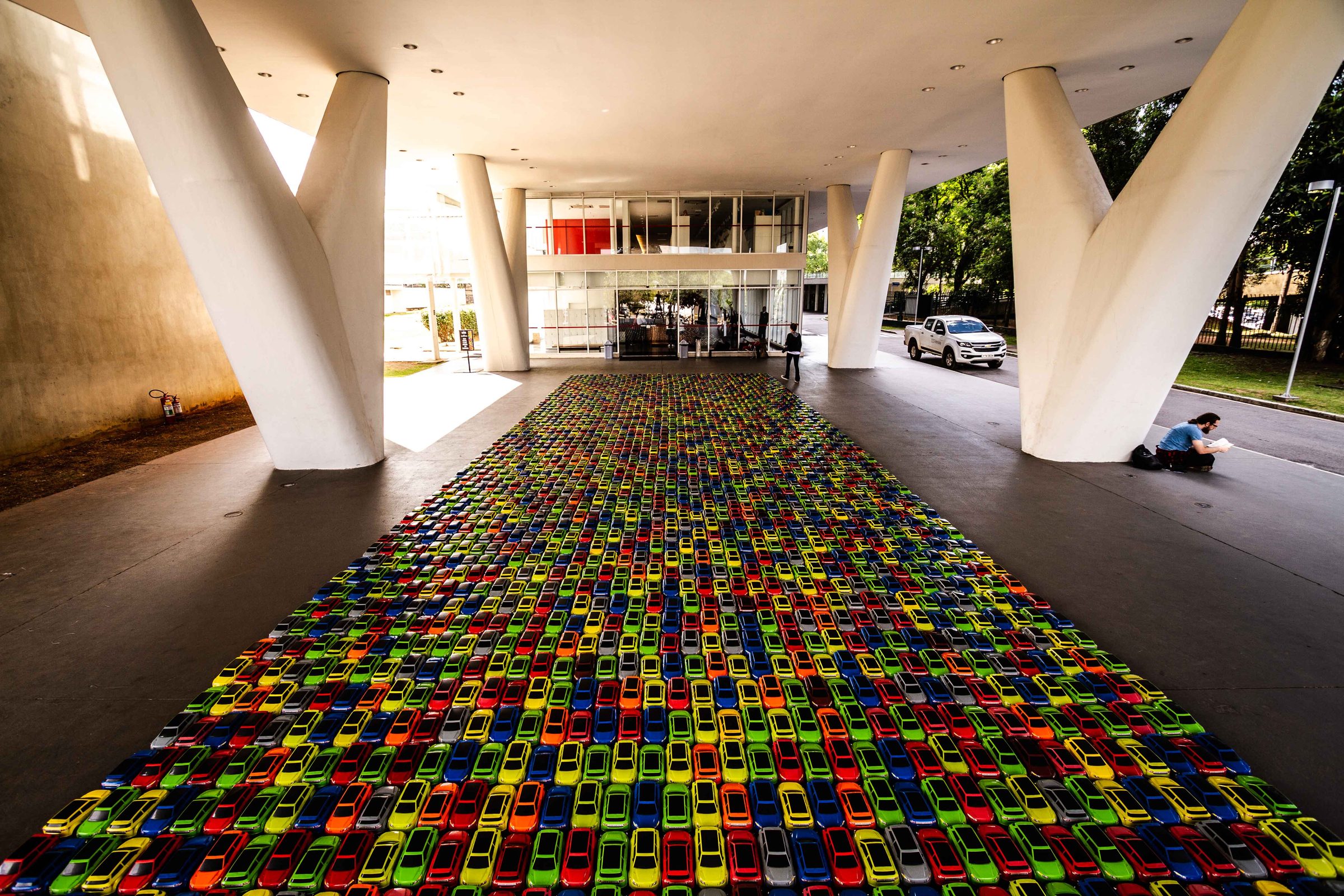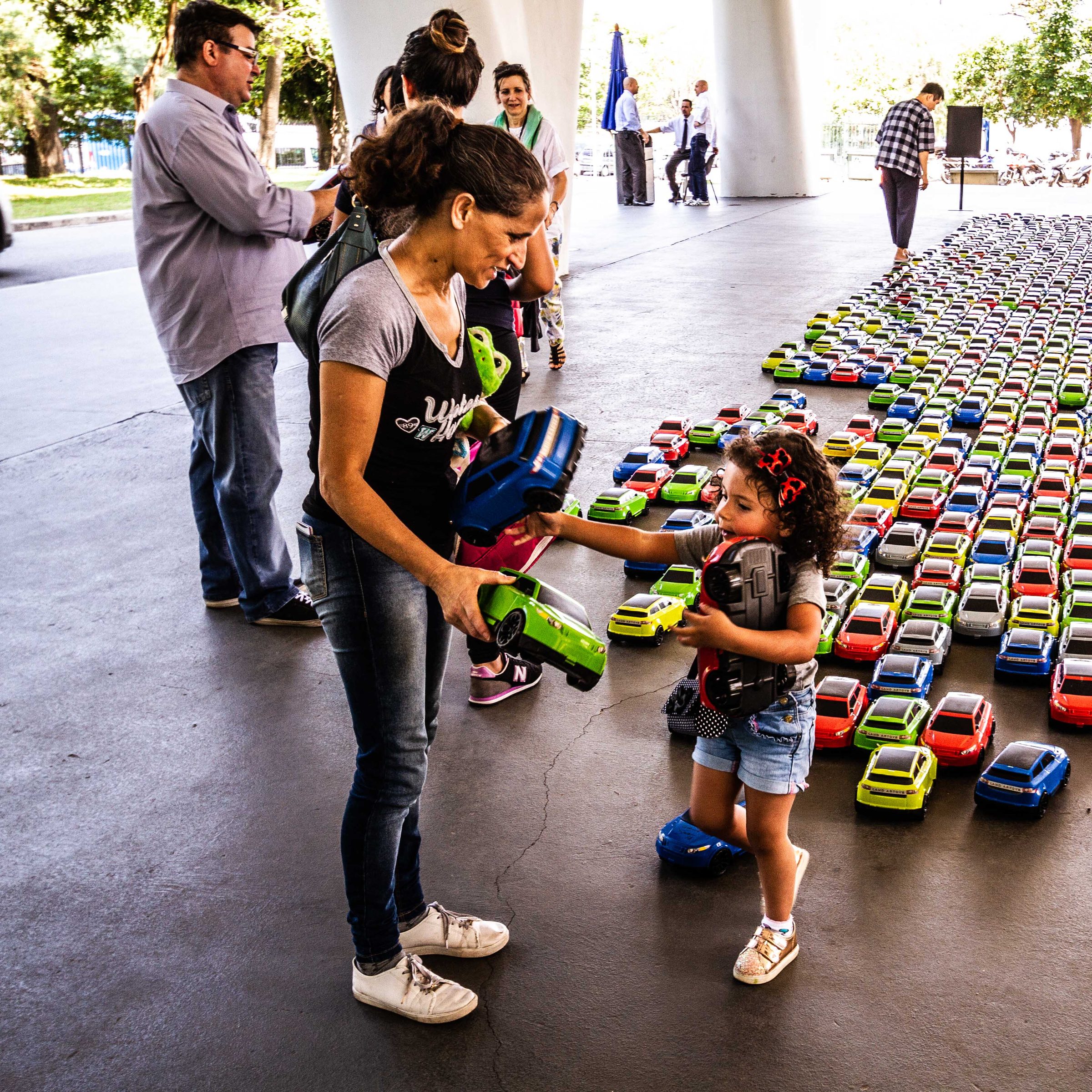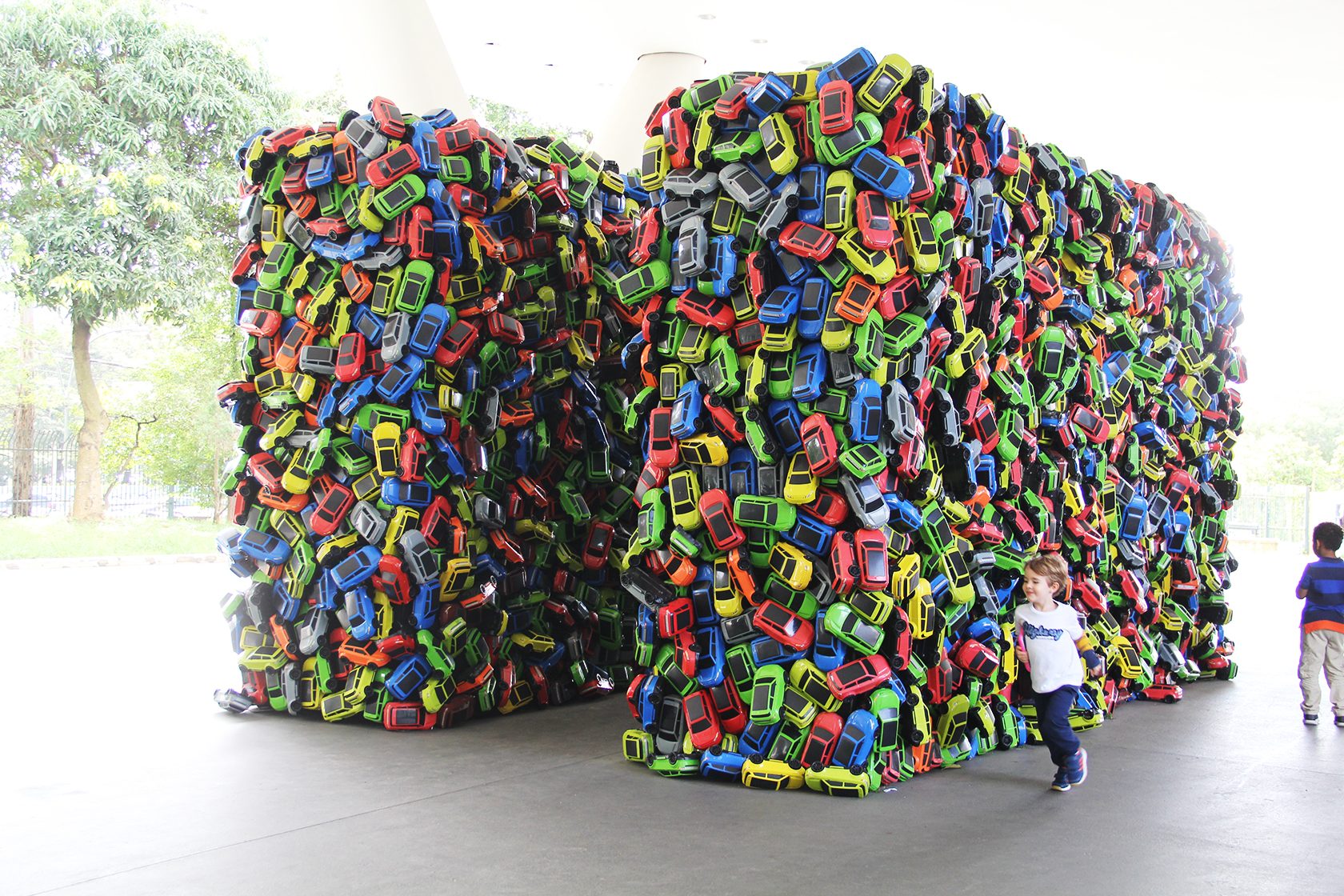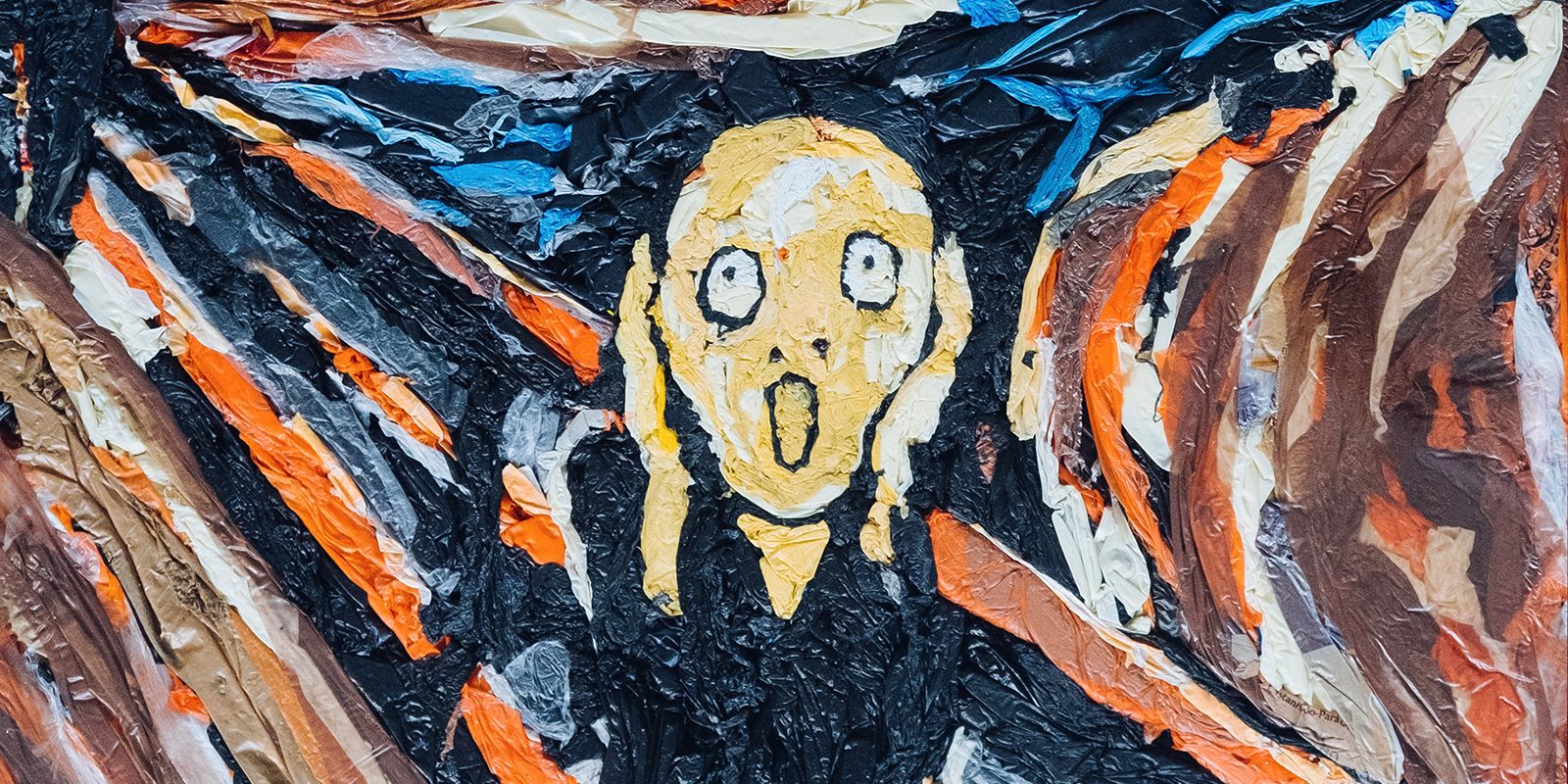
On the National Art Day, the artist inaugurated an unprecedented visual exhibition on Avenida Paulista to reflect on the impact of plastic on the planet.
Brazil is the 4th largest plastic producer in the world. Every year, 11 million tons of plastic waste are generated in the form of bags, bottles, and straws, which go straight to our beaches and waters. Plastic takes more than 500 years to decompose and its residues float in the water for longer than works of art history known by the general public and that have changed the course of culture in society.
Museu Indesejado presents 6 new creations of the artist produced only with plastic bags collected from the margins of the city's rivers and recycling cooperatives in São Paulo. The works were appropriated from famous paintings by great masters:
Monalisa (1503), by Leonardo da Vinci
The Scream (1893), by Edvard Munch
The Great Wave (1830), by Hokusai
Starry Night (1889), by Vincent Van Gogh
Kettle and Fruit (1890), by Paul Cézanne
Water Lilies in Bloom (1914), by Monet
The goal is to raise awareness about the impact of plastic on nature and its long decomposition time that attacks marine life and, consequently, our life.
"If these works are more than 100 years in the history of civilization, the plastic you throw into nature today will be too. The plastic you throwin the street goes to the culvert that goes to the rivers that flow into the sea." says artist Eduardo Srur.
The works are available on the virtual auction platform Blombô and the funds raised willgo to Cataki.
The show is commissioned by Corona, a brand that acts in this cause together with Parley For The Oceans, a global foundation that fights for the preservation of the oceans and the end of plastic pollution.
Plastic bags collected from rivers and cooperatives
varied dimensions